Summit County Continuum of Care
Housing Provider Think Tank
Collaboration. Innovation. Action. A Shared Commitment to Ending Homelessness.
Bringing Our Community Together
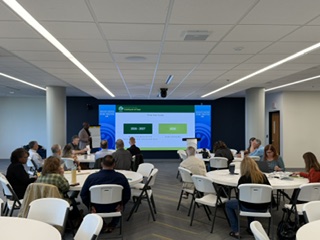
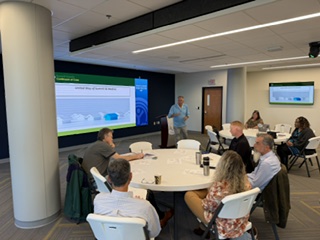
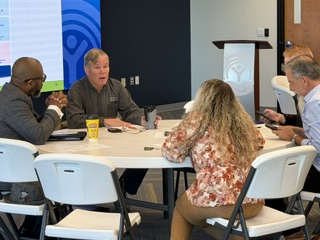
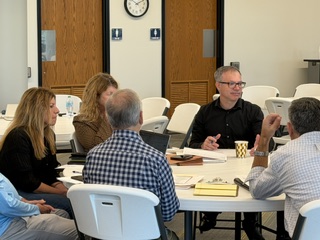
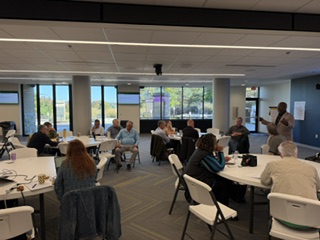
The Summit County Continuum of Care (SCCoC) Housing Provider Think Tank brings together housing providers, community organizations, public agencies, nonprofit leaders, and community stakeholders who share a common commitment to addressing homelessness and strengthening housing stability throughout Summit County.
Established as a collaborative, action-oriented initiative, the Think Tank provides a space for partners to come together, share perspectives, identify gaps in services, address system-wide challenges, and develop practical solutions that improve our community’s response to homelessness.
Our work is grounded in collaboration, shared accountability, and the belief that no single organization can solve homelessness alone. By bringing together organizations with different experiences, expertise, and resources, we are working toward a more coordinated, accessible, and effective homeless response system.
The Think Tank is more than a place for discussion. It is an opportunity to turn ideas into action, strengthen relationships, build partnerships, and collectively address the challenges facing individuals and families experiencing homelessness.
Our Priorities and Areas of Focus
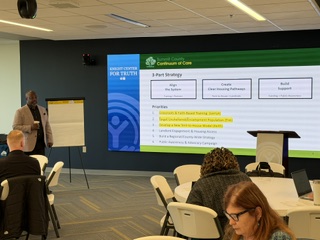
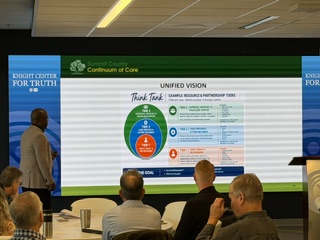
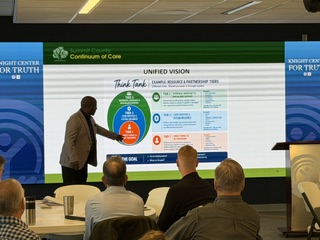
The Think Tank is organized around three key priorities designed to move conversations into meaningful action and create lasting improvements throughout Summit County.
1. Encampment Response
Developing a coordinated, compassionate, and effective community response to individuals experiencing unsheltered homelessness. This work focuses on strengthening communication among community partners, identifying appropriate interventions, and connecting individuals to services and pathways toward housing stability.
Through collaboration among outreach teams, public agencies, housing providers, and community organizations, we seek to develop approaches that prioritize dignity, engagement, safety, and meaningful connections to housing and supportive services.
Unsheltered Subgroup
- Tim Edgar (Lead)
- Keith Stahl
- Eufrancia Lash
- Fred Berry
- Bill Leahy
- Melissa Massey-Flinn
- David Churbock
2. Tent-to-House Initiative
Exploring strategies to move individuals and households experiencing unsheltered homelessness from temporary outdoor living situations into safe, stable housing.
This work emphasizes collaboration among housing providers, outreach teams, service organizations, and community partners to identify barriers, explore available resources, and develop practical housing solutions. The goal is to strengthen pathways from unsheltered homelessness to permanent housing while improving coordination and accountability across the community.
Tent to House Subgroup
- Keith Stahl (Lead)
- Jim Cole
- Tim Edgar
- Joe Rizzo
- Joe Scalise
3. Knowledge and Learning Network
Building a stronger network of shared knowledge, education, and professional development among housing providers and community partners.
This priority focuses on expanding training opportunities, sharing best practices, strengthening trauma-informed approaches, and ensuring that organizations have the information and resources necessary to serve individuals and families effectively.
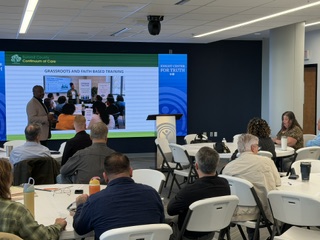
The Knowledge and Learning Network also seeks to strengthen engagement with grassroots organizations, faith-based communities, and other community stakeholders, recognizing that addressing homelessness requires the participation and understanding of the broader community.
Knowledge and Learning Subgroup
- Lerryn Campbell (Lead)
- Latoya Harris
- Georgann Mirgliotta
- David Churbock
- Holly Klein
- Fred Berry
- Bill Leahy
Moving Priorities into Action
The Think Tank is committed to translating ideas and discussions into measurable progress. Through workgroups, collaborative discussions, and ongoing engagement, members are working to advance several areas of focus, including:
- Strengthening Coordination and Communication: Improving information sharing, collaboration, and coordination among housing providers and community partners.
- Identifying System Gaps: Examining barriers to housing, gaps in services, and opportunities to improve the homeless response system.
- Data, Dashboards, and Accountability: Developing shared dashboards and reporting tools to better understand community needs, monitor progress, and support informed decision-making.
- Training and Professional Development: Expanding trauma-informed training, educational opportunities, and shared learning experiences for housing providers and community partners.
- Community Engagement: Strengthening partnerships with grassroots organizations, faith-based communities, and other stakeholders to broaden community involvement.
- Unsheltered Homelessness: Supporting coordinated responses to encampments and exploring innovative approaches to moving individuals from tents to stable housing.
- Shared Learning and Best Practices: Creating opportunities for organizations to exchange knowledge, resources, and strategies that strengthen service delivery.
The Think Tank’s work is intended to extend beyond monthly meetings. Through defined priorities, workgroup activities, shared responsibility, and continued follow-through, we seek to ensure that ideas become initiatives and initiatives lead to meaningful community impact.
Measuring Progress and Sharing Our Impact
Transparency, accountability, and continued communication are important parts of the Think Tank’s commitment to the community. To keep partners and stakeholders informed, the Summit County CoC will share quarterly Think Tank Progress Reports highlighting the work taking place across each priority area.
These updates will showcase accomplishments, workgroup activities, emerging challenges, training opportunities, partnerships, and next steps. Where available, we will also share relevant data, dashboards, and measurable outcomes that demonstrate progress and help identify where additional attention and resources are needed.
Our goal is to ensure that the community can see not only what we are discussing, but what we are accomplishing together. By regularly communicating progress, celebrating collaboration, and identifying opportunities for continued improvement, we reinforce our shared responsibility for building a stronger homeless response system.
Our Think Tank Members
The strength of the Think Tank is its membership. We are grateful to the individuals and organizations who contribute their time, experience, leadership, and commitment to this collaborative effort.
Housing Providers and Community Partners
- Jackie Hemsworth – ACCESS Inc.
- Debbie Barry – Akron Metropolitan Housing Authority
- Megan LaConte – CANAPI
- Melissa Massey-Flinn – CHC Addiction Services
- Eufrancia Lash – City of Akron
- Keith Stahl – Community Support Services
- Erica Ward – Family Promise
- Holly Klein – Grace House
- Karla McDay – Harmony House
- Jim Cole – Haven of Rest
- Lerryn Campbell – Homeless Charity
- Fred Berry – HM Life
- Teresa Stafford – Hope and Healing
- Dominique Wilkes – Legacy III
- Janice Stahl – NCCH
- David Churbock – Peter Maurin Center
- Bill Leahy – St. Vincent de Paul
- Joe Rizzo – Sheltercare Inc.
- Joe Scalise – United Way of Summit & Medina Counties
- Timothy Edgar – Tarry House
- Taba Aleem – Akron AIDS Collaborative
- Tammy Skipper – Fair Housing
Summit County Continuum of Care Board Representatives
- Latoya Harris – Summit County
- Constance Bozeman – Summit County Public Health
- Matt Seifert – Community Support Services
- Georgann Mirgliotta – Hope Farms
Summit County Continuum of Care Staff
- Adam Ciganik – Operations Manager
- Judy Hanna – Quality Assurance and Compliance Officer
- Jada Moore – Youth Manager
- Charles Rheaume – Accountant
Together, We Move the Work Forward
Ending homelessness requires more than individual programs and organizational efforts. It requires a community willing to work together, challenge existing approaches, share responsibility, and pursue solutions that create lasting change.
The Summit County Housing Provider Think Tank represents our commitment to that work. It reflects the importance of bringing people, organizations, and resources together around a shared purpose.
We recognize that meaningful progress happens when we move beyond organizational boundaries, learn from one another, and embrace the responsibility we share in serving our community.
Through collaboration, shared knowledge, transparency, and collective action, we are building a stronger, more connected homeless response system and working toward a community where every individual and family has the opportunity to find stability, dignity, and a place to call home.
Together, we are stronger. Together, we are moving the work forward.
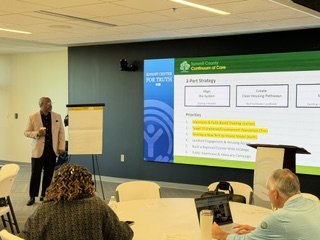
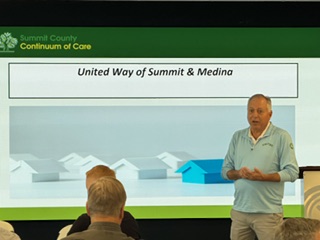
Think Tank Meeting — October 21, 2026